
SL-130
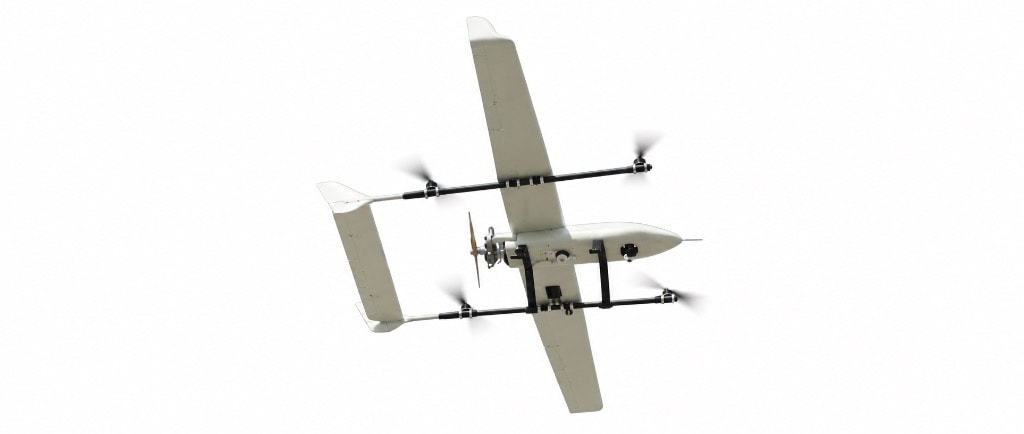
The SL-130 is an industrial unmanned aircraft combining the flexibility of vertical take-off and landing with the efficiency of fixed-wing flight. Its twin-boom airframe and rear-pusher configuration support material transport, aerial surveying, and monitoring missions without requiring a conventional runway.
Operational Use Cases
Material Transport
Movement of supplies and equipment to remote locations.
Disaster Monitoring
Aerial observation of affected areas to support response planning.
Environmental Monitoring
Observation of land, waterways, and changing environmental conditions.
Aerial Surveying
Survey and mapping missions using appropriately configured payloads.
Specifications
| Parameter | Specification |
|---|---|
| Maximum Takeoff Weight | 130 kg |
| Maximum Payload | 30 kg |
| Maximum Range | 530 km |
| Airframe Length | 3,900 mm |
| Airframe Width | 6,300 mm |
| Airframe Height | 1,100 mm |
| Maximum Ceiling | 4,000 m |
| Maximum Flight Time | 4 hours |
| Maximum Flight Speed | 150 km/h |
| Configuration | Twin-boom, rear-pusher compound-wing VTOL |
Specifications are supplier-reported. Maximum payload, range, endurance, and speed are individual limits and should not be interpreted as achievable simultaneously.
Ready to Deploy the SL-130?
Contact our team to discuss configuration, integration, and support options for your specific operational requirements.